From Chat to Deal: Running a Sales Pipeline in WhatsApp
Ask any team selling over WhatsApp where their leads are, and the honest answer is: somewhere in the scroll. Interested customers write in, the conversation is warm for a day, and then it sinks under newer chats. Nobody decided to ignore the lead — the inbox simply has no memory. A pipeline fixes this by giving every conversation a stage, an owner, and a next step, so the question changes from "who wrote us?" to "what happens next with this deal?"
The good news: you do not need to move your sales team out of WhatsApp to get there. You need to put a thin layer of structure on top of the conversations they are already having — our in-depth guide to WhatsApp business automation shows where the pipeline fits into that bigger picture.
Every conversation becomes a card
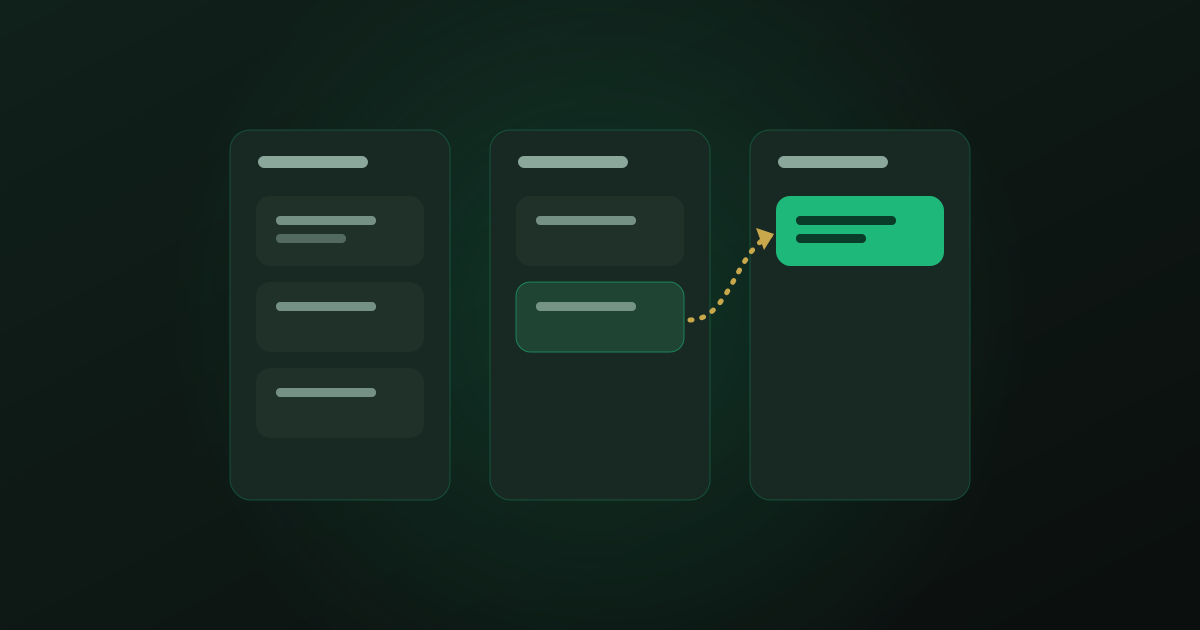
The moment a lead shows buying intent, the conversation should become a deal card on a Kanban board — new, qualified, proposal sent, won. Dragging a card is faster than updating a spreadsheet, and the chat history travels with the card, so context is never lost between colleagues. When a teammate takes over a deal, they read the actual conversation, not a half-filled CRM note written from memory.
Keep the board honest by keeping it small. Five or six stages are enough for most teams. A furniture retailer we work with runs exactly four: inquiry, measurement booked, quote sent, won. Anything more granular and salespeople stop updating it — and a board nobody updates is just a prettier version of the scroll.
Let the AI do the qualifying
The first questions of sales qualification are always the same: what do you need, for when, what budget, who decides. An AI assistant can collect these naturally in the conversation and file the answers into the contact's fields — so when a human picks up the deal, the discovery is already done. Instead of opening with "how can I help you?", your salesperson opens with a concrete proposal.
This also solves the speed problem. Leads that get a reply within five minutes convert many times better than leads that wait an hour, but no team can staff every evening and weekend. The AI answers instantly, qualifies while the interest is hot, and hands over a deal card with the essentials already filled in.
- Define your stages around customer actions, not internal wishes — "asked for price" beats "contacted".
- Set a follow-up automation for every stage; silence is where deals die.
- Track why deals are lost — the answers usually point at one fixable step.
- Give every card an owner. Shared responsibility on a deal means no responsibility.
For many businesses, the natural end of qualification is a booked appointment — a consultation, a viewing, a demo. Letting the assistant schedule that meeting in the same conversation removes one more gap where deals leak — our guide to automating appointment booking on WhatsApp shows how to set that up.
Follow-ups without the awkwardness
Most deals need three to five touches, but manual follow-up feels pushy and gets forgotten. Automations that wait for a reply — and only nudge when none arrives — keep deals moving with none of the guilt. The customer experiences it as attentiveness, not pressure.
Make each nudge earn its place. A good follow-up adds something — a photo of the product in stock, an answer to an earlier question, a gentle deadline like "the offer price holds until Friday". Three value-adding touches outperform ten copies of "just checking in", and they protect the relationship for the next purchase even when this one falls through.
A pipeline is not bureaucracy. It is the difference between selling and hoping.
— be digital ai team
Measure the pipeline, not just the wins
Once deals live on a board, three numbers tell you almost everything: conversion between stages, time spent in each stage, and the reasons deals are lost. If half your deals stall at "proposal sent", the problem is not more leads — it is the proposal or the follow-up after it. Review these numbers weekly and fix the single worst stage before touching anything else.
Lost deals are not dead, either. A contact who went quiet in March may be ready in September. Because every lost card keeps its history and its context, a well-timed campaign to cold deals is one of the cheapest revenue sources you have — which is exactly where broadcasts, used carefully, come back into play. Our comparison of WhatsApp broadcasts vs. automations explains when each tool fits.
Start this week, not this quarter
You do not need a migration project. Define four stages, move your ten warmest current conversations onto the board, and add one follow-up automation for the stage where deals go quiet most often. Within a week you will know exactly where your revenue leaks — and that knowledge alone usually pays for the whole setup.
A live demo of deals moving from first message to closed — inside the chat.
Book a Demo